

If your dentist has ever mentioned that a tooth “needs a crown,” your first reaction might be a mix of questions and mild dread. What does that actually mean? How bad is it? Is the procedure painful? The good news is that a dental crown is one of the most common and reliable restorative treatments in dentistry, and understanding what it involves takes a lot of the mystery out of it. A crown doesn’t signal failure. More often than not, it signals that a tooth worth saving is getting exactly the protection it needs.
At Ponder Memory Family Dental in Lakeview, New Orleans, we believe that honest treatment planning means recommending a crown only when it’s truly the right call. Dr. Ponder has over 10 years of experience as a general dentist and approaches restorative care with a clear philosophy: if a tooth can be saved in a way that will serve you long term, that’s the path worth taking. Crowns are a big part of that toolkit.
What Is a Dental Crown?
Think of a dental crown as a fitted cap for a damaged or weakened tooth. It covers the entire visible portion of the tooth above the gumline, restoring its shape, size, strength, and appearance. Crowns are used to repair badly broken-down teeth and can be made from a variety of materials, including porcelain, metal, or a combination of both. Once placed, a crown functions just like a natural tooth, allowing you to chew, speak, and smile without disruption.
Crowns are considered indirect restorations, meaning they’re custom-made outside the mouth and then bonded onto the tooth. This sets them apart from fillings, which are placed directly into a cavity. The custom fit is part of what makes them so durable and long-lasting.
When Do You Actually Need a Crown?
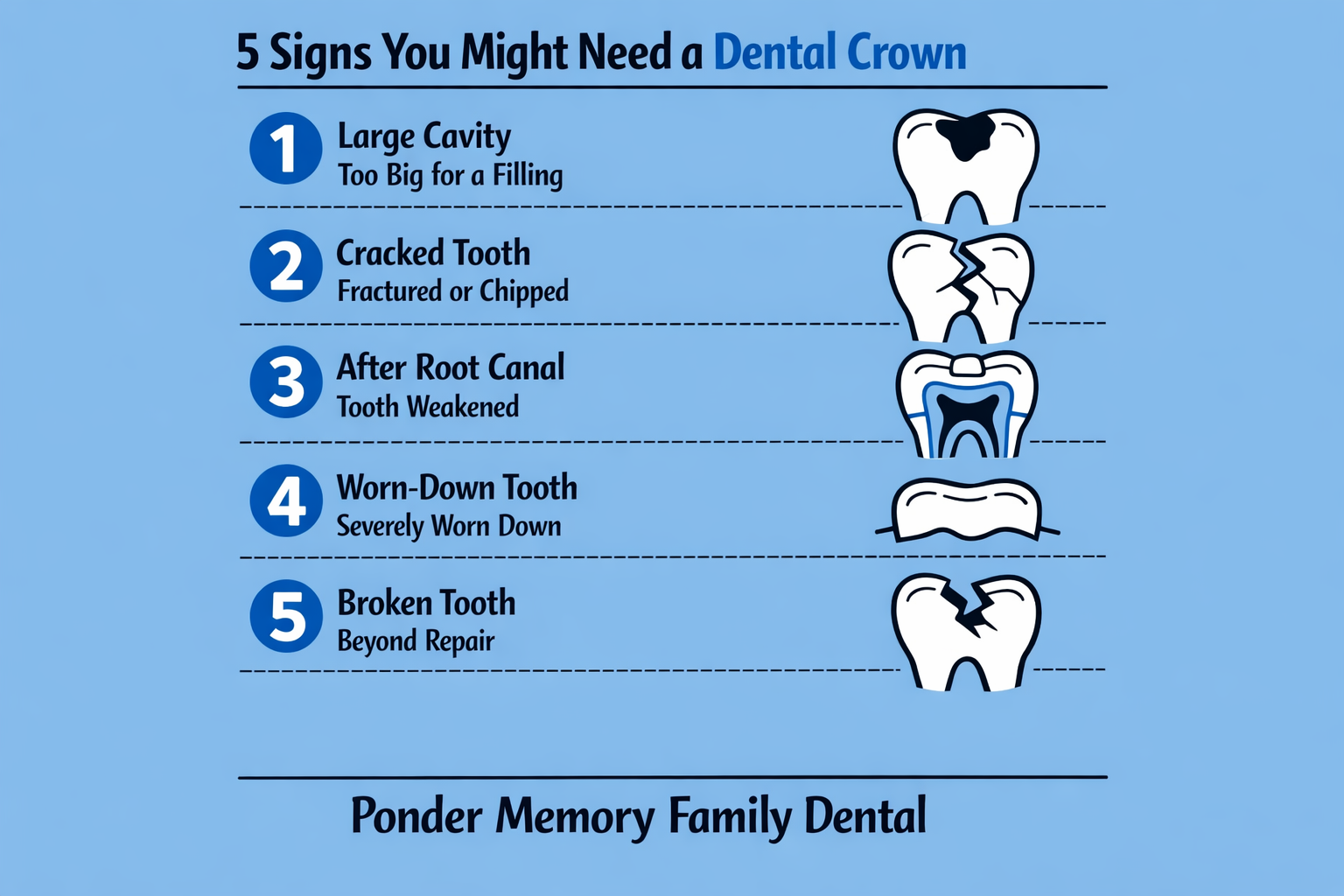
Not every damaged tooth needs a crown, and we wouldn’t recommend one unless it’s necessary. That said, several situations call for this level of protection. Here are the most common scenarios where a crown becomes the right choice:
- A tooth with a large cavity that’s too far gone for a filling
- A cracked or fractured tooth that’s at risk of splitting further
- A tooth that’s been weakened after root canal therapy
- A severely worn-down tooth due to grinding or acid erosion
- A broken tooth that can’t be restored with a filling alone
Each of these situations puts the tooth in a vulnerable spot. A crown wraps around that vulnerability, giving the tooth a fighting chance for years to come.
How Long Does a Crown Last?
With proper care, a dental crown can last 10 to 15 years or longer. Research published on PubMed found that 95% of crowns remain in the mouth for at least five years, with more than 90% requiring no catastrophic treatment in that same window. The longevity really comes down to a few key habits: brushing twice a day, flossing daily, and keeping up with your routine preventive care appointments. If you grind your teeth at night, we may also recommend a night guard, as excessive grinding is one of the more common culprits of crown wear.
It’s also worth noting that a crowned tooth can still develop decay around the base where the crown meets the gumline. This is another reason why regular checkups matter. Catching early issues before they compromise the crown keeps you from replacing it sooner than necessary.
Is a Dental Crown Ever an Emergency?
Sometimes, yes. A crown can become urgent when a tooth breaks suddenly, a temporary crown falls off, or pain signals that something beneath the crown has changed. If you’re dealing with dental pain or a broken tooth in Lakeview, our emergency dentistry services are available to help you get seen quickly and avoid further damage.
Delaying treatment on a tooth that needs a crown can turn a manageable situation into a much more involved one. The sooner we assess it, the more options you have.
Ready to Save That Tooth? Ponder Memory Family Dental Has You Covered
At Ponder Memory Family Dental, we take a practical, patient-first approach to every restorative recommendation we make. Dr. Ponder completed her hospital-based general practice residency, which gave her extensive training in oral surgery and anesthesia. This means she can handle complex restorative cases with the kind of confidence that comes from real clinical depth. We also use intraoral cameras and digital X-rays to show you exactly what we see, so you always understand why a crown is being recommended before we move forward.
We know dental work can feel stressful, and we’re not here to make it worse. Whether you’re dealing with a cracked tooth, a cavity that’s gone too far for a filling, or a tooth that’s just been through a lot, we’re here to walk you through your options clearly and honestly. If you’re ready to restore your smile with a trusted Lakeview dental team, reach out to us today to schedule your appointment.