

Most people know a dental exam involves someone poking around their mouth with a small metal instrument, but few patients know what’s actually being assessed. Contrary to popular belief, a routine visit is less about checking for cavities and more about reading the full story your mouth is telling. Teeth, gums, jaw, soft tissue; each one offers a window into what’s going on beneath the surface, and a trained eye can catch things long before they become painful or expensive.
At Ponder Memory Family Dental in Lakeview, New Orleans, Dr. Ponder brings over 10 years of experience to every exam, paired with a philosophy that keeps patient education at the center of care. Using intraoral cameras and digital X-rays, she walks patients through exactly what she’s seeing in real time. Routine preventive dentistry is one of the most powerful tools available for long-term oral health, and it starts with knowing what a dental exam is actually designed to find.
What the Visual Exam Covers
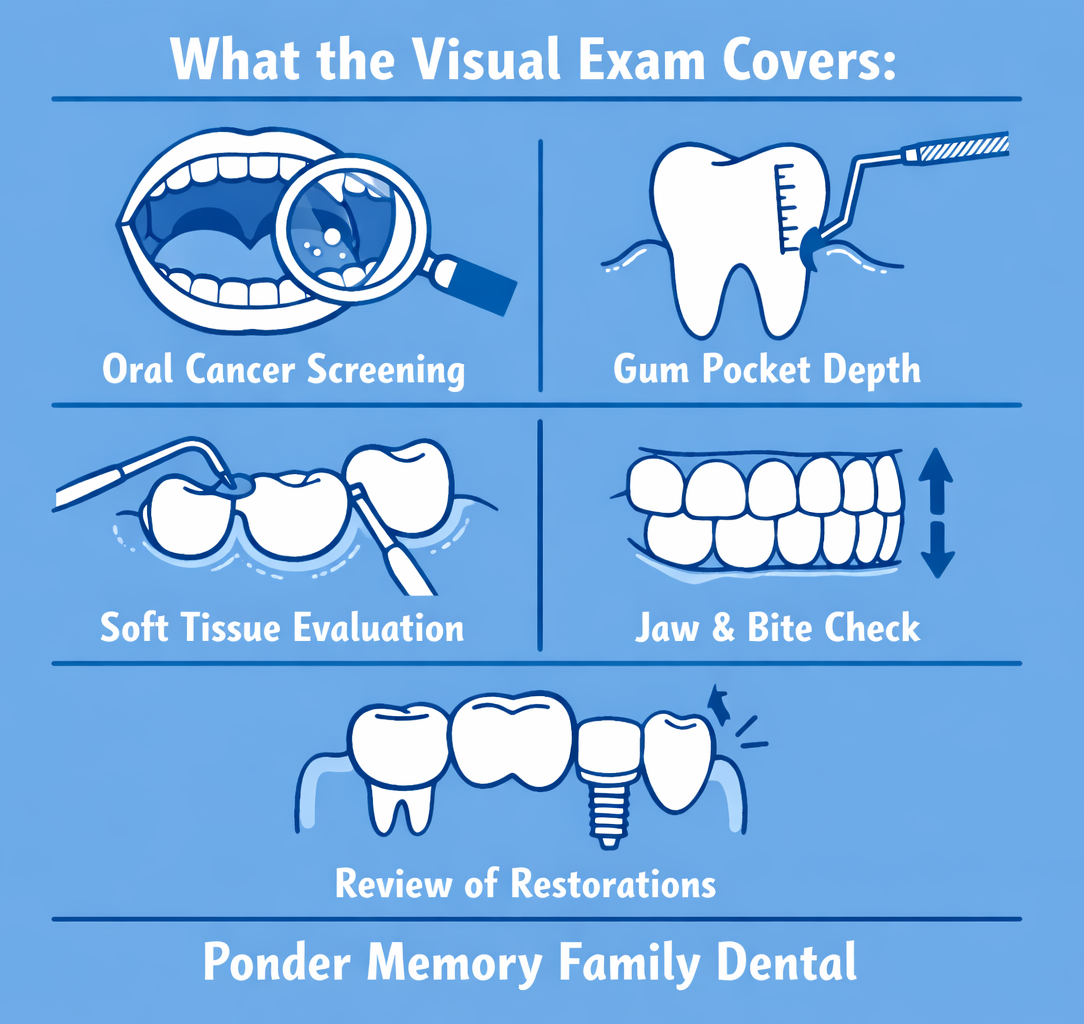
A dental exam is essentially a systematic inspection, and the process starts the moment your dentist looks in your mouth. Soft tissue is one of our first priorities. The cheeks, tongue, floor of the mouth, and gums are all examined for any unusual changes in color, texture, or shape.
Oral Cancer Screening
Oral cancer screening is a standard component of a thorough dental exam. The dentist looks for lesions, sores, or patches that don’t belong, particularly on the tongue, lips, gums, and throat. Many early indicators of oral disease cause no discomfort, which is exactly why these visual checks matter so much at every appointment.
Oral cancer isn’t the only concern during a soft tissue review. The gums are also evaluated for signs of inflammation, recession, or bleeding that may indicate gum disease. Early-stage gum disease responds well to professional treatment, but left unaddressed, it can lead to significant bone loss and tooth instability over time.
What Your Gums Reveal
Gum health is a significant focus during any comprehensive exam. Dr. Ponder measures the depth of the pockets between your teeth and the gumline using a small probe, looking for pockets deeper than normal, which indicate the beginning or progression of periodontal disease. According to the CDC’s oral health data, poor gum health is a leading contributor to tooth loss in adults, making this part of the exam essential.
The Role of X-Rays in a Dental Exam
The visual exam tells one part of the story, but it has limits. X-rays fill in the rest. Digital radiographs allow your dentist to see bone levels, the roots of teeth, the spaces between teeth, and areas beneath existing restorations that the naked eye cannot see.
Cavities that form between teeth are invisible during a visual exam. X-rays reveal them early, when a small filling may be all that’s needed rather than a more involved restoration like a dental crown. X-rays also show bone density, which provides important context about a patient’s periodontal health and long-term structural stability.
At Ponder Memory Family Dental, digital X-rays reduce radiation exposure while still delivering clear, high-quality images. The goal is always to gather the information needed without excess, staying true to the practice’s “if it ain’t broke, don’t fix it” approach to care.
Beyond Your Teeth: The Bigger Picture
A dental exam also includes an evaluation of the jaw joint and bite. Dr. Ponder checks for signs of clenching or grinding, which can wear down tooth enamel and stress the temporomandibular joint over time. Asymmetry in the bite or clicking and popping in the jaw are noted and addressed.
Existing dental restorations, such as fillings, crowns, or bridges, are also reviewed during the exam. Even well-placed restorations don’t last forever, and checking their condition at every visit helps detect wear, cracks, or marginal breakdown before they reach the underlying tooth. This kind of proactive review is at the core of honest, preventive-first dentistry.
One of the clearest things a dental exam does is identify the difference between something that needs attention now and something that simply needs monitoring. Not every finding requires immediate treatment, and that honest distinction is something patients at this practice hear regularly.
Get Started at Ponder Memory Family Dental
Dr. Ponder built this practice around the belief that patients deserve to understand what their dentist is seeing and why it matters. With extensive training in a hospital-based general practice residency, she brings a level of clinical experience to routine exams that goes well beyond the basics, including in-house capabilities for extractions and more complex procedures when genuinely needed. At Ponder Memory Family Dental, we accept most major insurance carriers, including Delta Dental, Cigna, Aetna, Humana, United Healthcare, and MetLife, and offer in-house payment and membership plans for patients who need them.
A dental exam is one of the simplest and most effective investments in long-term health, and it starts with a conversation. To schedule your visit with Dr. Ponder and her team in Lakeview, contact Ponder Memory Family Dental today.